
Whether you’re pitching children’s IP, looking for writing work or building relationships, here’s how to prepare
The International Exchange is one of my favourite parts of Sheffield’s annual Children’s Media Conference. I’ve attended twice, found it really fruitful, and will definitely sign up again in the future.
If you’re a writer planning to attend the International Exchange in July, here are some tips to help you get the most from the experience.
First: Why Are You Going?
Before you book a single meeting, think about your goal.
Are you:
- An animation writer pitching original IP?
- An author hoping to explore TV adaptation opportunities?
- A screenwriter looking for work and industry contacts?
Your goal will shape who you meet, what you prepare and how you use your time.

Understanding the Format
You’ll typically have around 11 meetings, back-to-back, with a short break halfway through.
Each meeting lasts just 15 minutes. That might sound like a long time, but it isn’t.
The other person needs to find your table, sit down, introduce themselves and have a conversation with you. Before you know it, the meeting is over.
The biggest mistake some people make is trying to cram too much into those 15 minutes.
If You’re Pitching Original IP
My biggest piece of advice is simple: Pitch one idea if you possibly can.
Many writers arrive with a whole portfolio of projects and try to talk about all of them. If possible, choose your strongest idea and focus on that.
If you genuinely can’t choose one, limit yourself to two or three projects and make sure they are distinct from one another, perhaps targeting different age groups or audiences.
Prepare a Three-Minute Pitch
For a single project, aim for a pitch of around three minutes. That’s enough time to communicate:
- The core concept, characters and idea.
- The target audience
- What makes it special
- Why you’re excited about it
Then stop talking to leave plenty of space for questions and conversation.
If you’re bringing multiple projects, prepare:
- A logline for each project
- A one-minute pitch for each project
- A longer three-minute version if someone wants more detail
Bring Something Visual
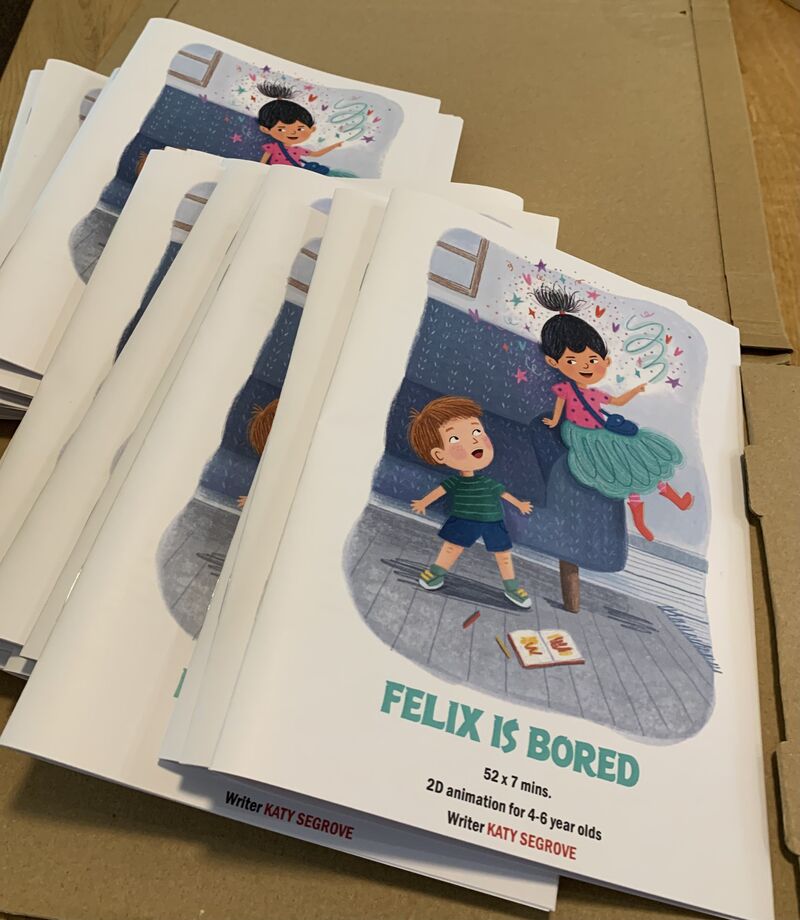
This isn’t essential, but it can help. When I attended, I created a small pitch booklet containing artwork and a brief overview of the project. It gave people something tangible to take away and helped them remember the series afterwards.
It doesn’t need to be elaborate. Even a simple, attractive one-pager can be useful.
If You’re an Author
Perhaps you’ve written picture books, early readers or chapter books that you think could translate well to screen. Again, resist the temptation to try and talk about everything you’ve ever written.
Bring physical copies if you want your table to look pretty and impressive. But hone in on 2-3 books only.
Choose the books that:
- Have been most successful
- You’re most passionate about
- Have the strongest screen potential
Prepare:
- A short logline for each book
- The target audience
- A sense of why it would work as a TV series or film
If someone responds positively to a particular title, then you can expand on it.
If You’re Looking for Writing Work
Not everyone attends the International Exchange to pitch. You might simply want people to know who you are and what you do.
If that’s your goal, spend some time preparing a short introduction about yourself.
Be ready to explain:
- Who you are
- What you’ve written
- Your experience
- The kinds of projects you’d like to work on next
Just as importantly, think about the questions you’d like to ask.
– What do you want to learn about the industry?
– What TV shows are your guest developing?
– What information would genuinely help your career?
The best meetings often feel more like conversations than pitches.
Who Should You Meet?
If you’re pitching an idea, producers, development executives and production companies are usually a good place to start. Broadcasters and commissioners can also be valuable contacts.
Don’t limit yourself to UK companies. Children’s media is an international industry, and collaborations happen across borders all the time. Most importantly, be open-minded. You may not get meetings with every company on your wish list. That’s completely normal.
Fill your schedule anyway. Meet as many people as you can.
Sometimes the most useful conversations come from unexpected places.
You might also meet:
- Animation studios
- TV Consultants
- Sales executives
- Broadcasters
- Illustrators/Animators/Directors or Musicians
These meetings will all give you a chance to practise talking about your work, gather feedback and learn how people respond to your idea or ideas.
On the Day
A few practical tips:
- Arrive early.
- Bring business cards and a notebook
- Ask for contact details.
- Make notes during each meeting – if you don’t, it will all end up a blur.
- Stay flexible and conversational.
- Listen as much as you talk.
Remember that you’re not trying to close a deal in 15 minutes. You’re trying to start a relationship.
What To Do Afterwards
The follow-up is just as important as the meeting itself.
Within a few days:
- Send a short thank-you email.
- Remind them who you are.
- Mention what you discussed.
- Include anything you promised to send.
If someone has agreed to read material, don’t expect an immediate response.
Give them time. However, do put a reminder in your diary to follow up in around four weeks if you haven’t heard anything.
I also recommend keeping a spreadsheet recording:
- Who you met
- What you discussed
- Their response
- Any agreed next steps
- Follow-up dates
You’ll be grateful later.
Other Ways to Make the Most of CMC
The International Exchange isn’t the only networking opportunity available.
Consider:
- Commissioner speed meetings
- Going to the drinks receptions and parties
- Reaching out to attendees before the conference
- Arranging your own coffees and chats during the week
Sometimes the most valuable conversations happen outside the formal schedule.
Final Thoughts about the International Exchange
It can feel intense, but it’s also enormous fun.
Treat it as a chance to practise talking about your work, meet new people and learn more about the industry.
Go in prepared (practise your pitch at home beforehand), stay open-minded and follow up afterwards. You never know where a 15-minute conversation might lead.
If you want to read about my past experiences at the International Exchange, I’ve written all about it here.
And if you’re going to be there, let me know, as I’d love to meet up!