
I recently had some exciting news about the animation series I’ve been developing — it’s been optioned by a production company!
In case you don’t know what an option is: it means a production company has picked up the project and committed to trying to get it made.
TV series are expensive and take time to finance. They often involve one or more broadcasters coming on board, but an option agreement is the crucial first step. And it’s a big one.
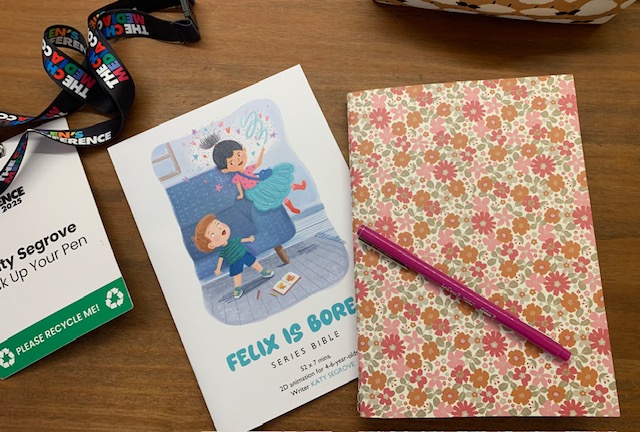
I’ve been developing this idea on my own for the past couple of years, getting feedback from trusted friends and colleagues along the way. It’s a big undertaking – a bit like writing a book or a film script. But instead of letting the size of the task overwhelm me, I broke it down into small, manageable steps.
Today, I’m sharing that process. I hope it will encourage you if you’re also working toward a big creative goal.
My “Lean Startup” Approach to Developing an Animation Series
First up, animation is a very collaborative field. So, rather than locking myself away and trying to perfect everything in isolation, I took a step-by-step, feedback-driven approach. I tested the idea in small ways and refined as I went.
Here’s what that looked like:
First Steps
🔹 Started small – I wrote a handful of scrappy one-pagers. Nothing fancy (if anything, they were kind of embarrassing!) But they were just enough to start conversations.
🔹 Shared early – I swallowed my pride and sent them to a few trusted colleagues. I listened carefully to their reactions and noted which questions came up most.
🔹 Focused in – From those conversations, I chose Felix is Bored as the idea to develop further. It started with a different title and shape entirely! But that’s the nature of development.
🔹 Built gradually – One page became two, then four. That turned into my first “mini bible” — a short, easy-to-share document to test the concept.
Being Brave
🔹 Practised pitching – I tested it out at a ScreenSkills Pitching Workshop. This was super scary, but I did it anyway, and was thrilled with the reactions I got. I tweaked my idea further and committed to pitching it more publicly.
🔹 Illustrations – I commissioned a few beautiful character designs. As this was an animation idea, the bible had to be visual. So I made a small but necessary investment.
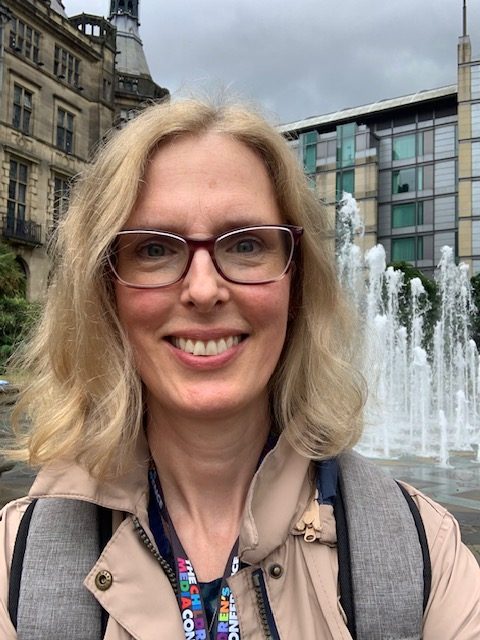
🔹 CMC Round 1 – If you work in kids’ TV, and are based in the UK, the annual Children’s Media Conference is a must. I went in 2024 and pitched Felix is Bored at the International Exchange, listened closely to feedback, and collected contacts.
Reflecting
🔹 Taking stock – Back at my desk, I reviewed everything: what were people curious about? Which comments cropped up again and again?
🔹 Refinement – I expanded the bible and strengthened the concept based on what I’d learned. However, I ensured it remained true to my personal vision.
🔹 Pilot experiment – I tried writing a pilot script. It wasn’t right, so instead of forcing it in the limited timeframe that I had, I set it aside and focused on improving the series bible.
Persevering
🔹 CMC Round 2 – This summer, I went back to the Children’s Media Conference with a stronger package. I pitched at the International Exchange again. But I also arranged lots of extra meetings during the conference with a wide range of producers, directors and consultants. I also took full advantage of the commissioner speed sessions. These are 5-minute meetings with the likes of the BBC and Milkshake.
🔹 Refined again – Once home, I analysed the feedback, noted who was most interested, and enhanced the concept even more more.
🔹 Followed up – I emailed everyone who wanted to continue the conversation. Those ongoing relationships have been key.
🔹 Kept improving – Each round of feedback made the project sharper, clearer, and more resilient.
The Results
Developing an animation series is a long, old process. But those small, steady steps led me to a production company that wants to help bring Felix is Bored to life. 🚀
It’s still early days, but I felt it was worth taking a moment to pause, reflect, and celebrate this milestone (with pancakes for breakfast 🥞), and to remind myself that success happens one step at a time.
What Are You Working On?
If you’re working on your own project (or thinking about starting one), be brave and make a start. Big projects — whether a TV series, film, or book — can feel overwhelming. But you don’t need to have it all figured out from the beginning. Just start with what you know and build from there.
Small, consistent steps really can lead to big milestones.
And if you’re working on something small right now — that’s exciting and worthwhile too. I started with short films and sketches. They were fun, and each one taught me something that helped me get to the next level.
I’d love to know what you’re working on — drop me a line or leave a comment below.