
An inspiring conversation with Benita Cullingford, about late-life creativity, persistence, and why it’s never too late.
I first met Benita in 2020, when she first came to me for feedback on one of her scripts. Since then, she has built up an impressive body of work: from nonfiction to short films, award-winning feature scripts, and now an animation feature, Little Dog Tess Superstar, which has led to representation from an American manager. Benita only started writing seriously in her late 60s, and her story is a wonderful reminder that it’s never too late.
I spoke to Benita about her writing journey, her approach to feedback and rejection, and what she has learned from continuing to write, submit, adapt and try new things.
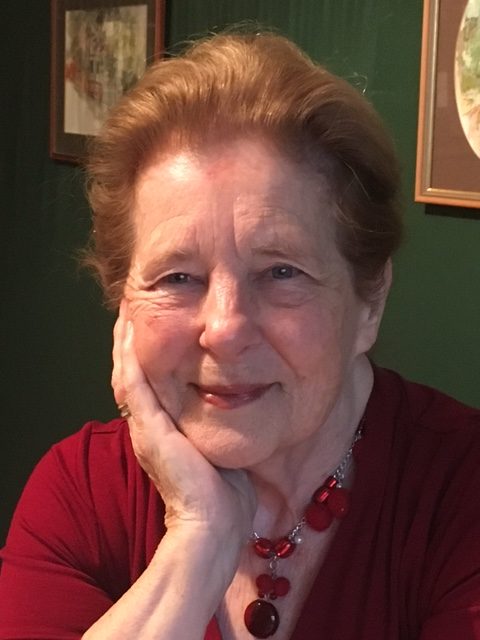
Have you always written, or was it something you pursued more seriously at a certain point?
I always had a lot of imagination. I’m a retired LAMDA drama teacher, so I think that tells you quite a lot. I used to write little plays for children, but I only started seriously writing in my late 60s. So it’s never too late!
The first course I took was a correspondence course. It started with article writing and moved on to short stories. My first article was published in a local Hertfordshire countryside magazine, which was terribly encouraging.
When I got to the end of the course, I realised I hadn’t actually written a large body of work, so I decided to write a nonfiction book.
Then our chimney sweep came to sweep our flue, and I said, “There must be a marvellous history of this old trade.” He said, “No, nobody’s ever bothered with us.”
So I did some research and discovered that nobody had really written it. Eight years later, after a huge amount of research all over the country, I wrote British Chimney Sweeps: Five Centuries of Chimney Sweeping, published in 2000 and still considered the definitive study of the trade. I’ve even been over to America to give illustrated talks to American sweeps.
How did you move from nonfiction and theatre into screenwriting?
After the chimney sweeping books, I thought I’d like to have a go at screenwriting. Having written so many plays, I thought it was going to be a doddle. Of course, it isn’t. I think screenwriting is the most difficult form I’ve tried.
Learning the format took a long time, but I persisted. I went on a screenwriting course in London, and I’ve written quite a lot of short films and two feature films that are now doing the rounds. My manager has them now, which is lovely to be able to say.
You began making short films with a group of women. How did that come about?
That started in the first lockdown, I was in my 80s!
I’m from St Albans, and I belong to a group called Abbey Writers, and I had two writing friends there, Jane and Anne.
During lockdown, my eldest daughter, Sharon, had come back to live with us, so I invited everyone round for tea on the lawn.
Anne told us about her daughter, Larissa, who had a degree in film photography. She didn’t want to do it professionally, but she wanted to keep her hand in.
I said, “Wouldn’t it be fun if Larissa came round and we filmed one of my plays in the back garden?”
So we made our first film, Bloomsbury Blues, about Virginia Woolf and her sister. We had such fun that we decided to take it more seriously.
We formed a group called JABS Productions: Jane, Anne, Benita and Sharon. Anne became our director, Larissa was our director of photography, I was producer and screenwriter, and Sharon did sound.
We’ve just finished our eighth film!
What has making films taught you?
Making films teaches you an awful lot about editing, pacing and getting the right shots.
But it’s great fun. If you don’t have fun, there’s no point doing it.
One of our short films, Snatched, is only five minutes long. It was nominated at an international film festival in Los Angeles, and we were invited out. We went to Hollywood and saw our little five-minute film on a huge screen. That was wonderful.
Your feature script Once a Thief has done very well in competitions. Can you tell me about that journey?
I’m the treasurer of the Society of Women Writers and Journalists. One of our associate members, Patrick Forsyth, is a travel writer who had started writing crime novels.
At one of our Christmas teas, people brought along their books, and I bought Patrick’s novel Once a Thief. From the very first page, I thought, “This is a film.”
I’d never adapted a book into a film script before, and I didn’t know what Patrick would think. But I rang him and said, “I’ve finally got round to reading your book and I loved it. I’d love to have a go at writing the feature film.”
He was incredibly excited, even though I warned him it would be a learning curve for me.
So I started writing it and sending him chapters. Once I finished it, I started sending it to competitions. I couldn’t believe it, because it kept getting nominated. To date, it has received six first-place awards and about 26 nominations in international film festivals.
Recently, Once a Thief won Best British Feature Screenplay at the London International Film and Screenwriting Awards.
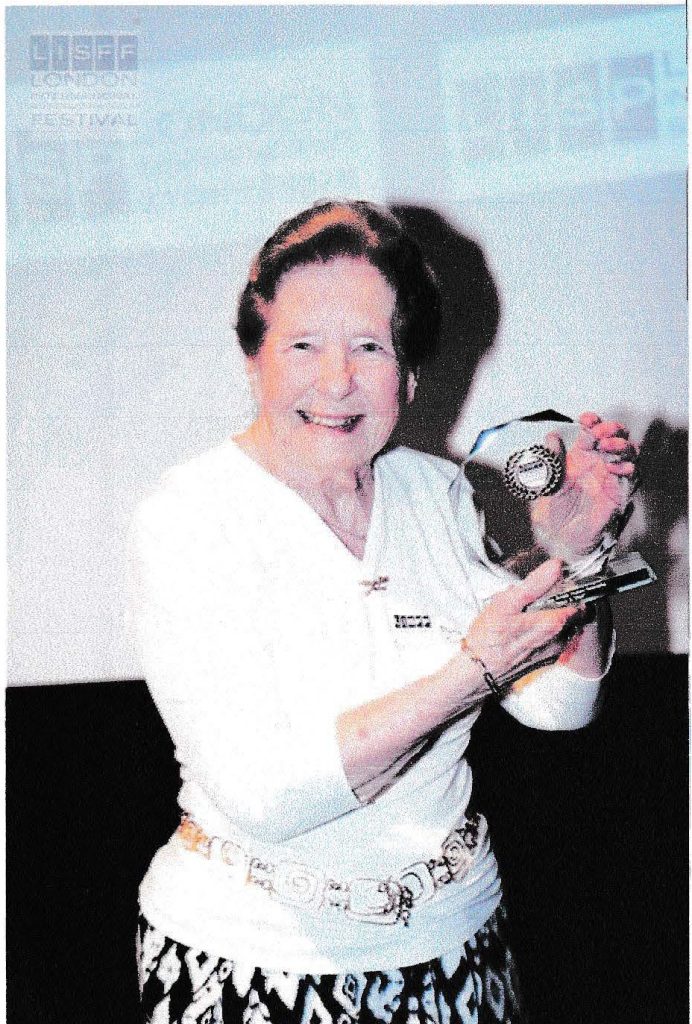
Do you have a strategic approach to entering competitions?
I don’t go for the expensive ones. That’s the main thing.
I joined FilmFreeway, which is very useful for finding competitions and festivals to enter. Now, because I’ve had some success, festivals sometimes approach me directly.
How do you approach feedback and rewriting?
I take feedback very seriously. I would never send out a first draft because you’re too close to your own work. Someone else has to read it.
Often, if somebody says something, I immediately think, “Oh yes, that is a better way of doing it,” or, “I never really liked that bit.”
Of course, not every note is right. But mostly I do take things on board.
How do you handle rejection or difficult feedback?
I’ve had loads of rejection. I’m just telling you about the good things.
Don’t write one thing, send it out, and then sit there waiting. I usually have two or three things on the go, so I don’t dwell.
When I started sending out short stories, I used to give myself a star if somebody actually replied — even if it was a no. If somebody replied and it was a possibility, I gave myself two stars. By the time I got the book published, I think I had about fifteen stars on my folder. It helped, rather like being back at school.
Let’s talk about Little Dog Tess Superstar. This is the script that led to representation. Where did the idea come from?
This is a nice story, and it’s completely true.
In our short film Snatched, the one that went to Hollywood, we needed a little dog. Up the road, there was a family with a small terrier, so I asked if we could borrow their dog for our film. They were thrilled.
Later, I found out Tess was elderly and had lived with lots of different owners before finally finding a good home. I thought, there’s a story here.
I’d never written an animation feature before, but I wanted to try. What I loved was the freedom of animation — animals can talk and you can move beyond ordinary reality.
I wrote an early draft of about 30 pages, but I wasn’t completely happy with it. I knew somebody needed to see it.
And that led you to Stage 32?
Yes. I belong to Stage 32 in America, and I saw they were running an eight-week course on writing animated features, taught by Evan Anglin from Zero Gravity Management.
I liked Evan from the beginning. He was encouraging and very generous with feedback.
He loved the idea of this little dog telling her life story and wanting to belong. At the end of the course, I sent him the full script.
Then he asked if we could have another Zoom meeting. I thought it would be a chance to say thank you and goodbye. But the first thing he said was, “Have you got an agent or a manager?”
I said no.
And he said, “I’d like to take you on as my client.”
I couldn’t quite take it in. Zero Gravity is a big management agency!
What does having a manager mean?
I’m still learning the answer to that! My understanding is that a manager is interested in you as a writer and in your wider career, not just one particular book or script.
You’re now writing the book version of Little Dog Tess Superstar. How is that going?
Evan suggested Tess could work as a book and audiobook as well as an animation feature, so I’m now writing the children’s book version.
Out of all the writing I’ve done, writing the film script of Tess was the most fun. I was giggling to myself while writing it. I’m really enjoying writing the novel too. It’s for children, probably somewhere around eight to ten.
I’m up to chapter eleven, and I’m loving it.
You’re 87, and I often hear writers worrying that they’re too old to get a break. What advice would you give them?
It’s never too late
Just keep going. And don’t throw anything away. I’m constantly recycling old ideas and adapting them into new forms.
So keep going, and don’t have just one thing on the go. Have several things on the go, so you can always move on to the next one.
Are you writing every day?
Yes, nearly every day I do some form of writing.
I write in longhand, in pencil, with a rubber. I go to the gym three times a week, and it’s in a rather nice hotel, so afterwards I sit there and write. Then, when I get home in the afternoon, I put it on the computer, and that becomes a sort of rewrite, which is very useful.
I often print it out, look at it, then carry on the next day.
Final thoughts
What struck me most about talking to Benita was not just her success, but her energy and willingness to keep learning.
For any writer worrying that it’s too late, or that one rejection means the end of the road, Benita’s story offers a much better model:
Keep writing. Keep learning. Keep something else on the go. And don’t throw anything away. But most of all, don’t forget, it’s never too late!
Feedback & Coaching
If you need any help on your own writing journey, whether that’s feedback on your work, 1:1 coaching, accountability, or support quietening that sneaky inner critic, I’m here to help. Check out Pick Up Your Pen to find out more about me and my approach to coaching. And to see if we might be a good fit, please book a free Discovery Call.
I have 50 commissioned scripts under my belt, and I’ve been coaching writers for over 6 years. It’s really rewarding, because writing is tough, and we all need a bit of help along the way.